
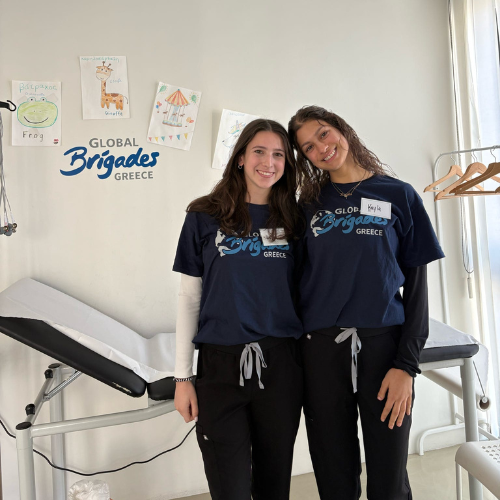
Going In With An Open Mind
As a first-time brigader, I had little idea of what to expect on the Greece Medical Brigade. I had heard about the experiences of volunteers who went on previous brigades in Honduras and Guatemala, two rural locations that are completely different from the clinic in Athens. So I went in expecting something similar: helping with clinic logistics, shadowing local physicians during consult, and educating children during Educational Workshops, which I had heard was a fan favorite station.
While I expected to be working hands-on and making a "direct" impact on patients, I surprised to spend most of my days shadowing physicians in a clinical setting that, in many ways, resembled what we have here in the US but with its own unique challenges and learning opportunities.
Understanding a Diverse Patient Population
During our sessions leading up to the brigade, I learned that the clinic primarily served refugees from the Middle East and Ukraine. What stood out to me most though, was the diversity of patients we encountered once we got there. The Global Brigades clinic in urban Athens serves anyone without private health insurance (which includes most of the population), so it was not uncommon for elderly Greek patients to come in for free, accessible healthcare.
I went in thinking we would be seeing patients at their most vulnerable: new to a country, unfamiliar with the language, navigating an entirely foreign system. s. And I was struck by how brave the refugee patients were, communicating with staff in a completely different language, trusting that they were receiving the best care possible.
When Context Shapes Care
One patient interaction stood out to me early in the week. A young female patient came in with stomach pain. My immediate thoughts went to appendicitis, or some other infection associated with localized abdominal pain. But the physician asked her for a urine sample, which, unsurprisingly to him, came back positive for a UTI.
After the patient left, the physician explained that situations like this were extremely common in refugee women. Symptoms that most of us would immediately recognize as signs of a UTI, like pain with urination, are often dismissed by these patients because they simply aren't aware of the problem. It was a quiet but powerful illustration of how housing instability, limited access to care, and language barriers don't just shape someone's life. They shape how a person understands their own health.
The Power of Compassion in Practice
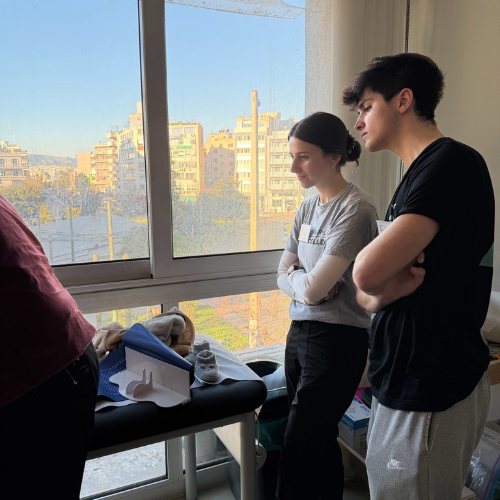
During my time observing physicians, I noticed the different techniques each used to make patients feel comfortable despite language barriers. One interaction stood out above all others.
A young male patient came to the ophthalmology station hoping to receive news that he would eventually see again out of his eye, where the retina had become detached. After working through a translator, the physician delivered the difficult reality that his vision would not return.
It was a challenging moment to witness. But what stood out even more throughout the week was how many physicians approached patient care with patience, empathy, and intention.They took extra time and effort to make patients who didn't speak the native language feel comfortable. They spoke slowly, waited for the translator, and explained exactly what they were thinking and doing throughout the examination.
That contrast reinforced for me how essential compassion is in medicine, not just in what is said, but in how it is delivered.
Preparing for a Different Kind of Learning
Looking back, I would have benefited from a deeper understanding of the patient population and the Greek healthcare system prior to arriving. While I knew we would be working with refugee communities, experiencing it firsthand brought a new level of perspective.
For future volunteers, I would encourage taking time to learn about the healthcare system in Greece and the communities you may serve. This brigade offers a different kind of learning—one that is equally meaningful and impactful.
What I'm Taking Forward
This experience changed the way I think about my future as a physician. Working in healthcare, I will encounter patients from all different backgrounds, ethnicities, religions, and legal statuses. Greece showed me that each of those factors requires a thoughtful change in approach, one that makes every patient feel safe and comfortable with their provider.
I will carry with me the skills I observed in those physicians who took the extra time to listen, to slow down, and to understand their patients' fears, both about their health and about their personal situations. They created environments of trust and comfort, even across language barriers, even in the most difficult moments.
What I thought would be an opportunity to strengthen my clinical skills and gain experience with a new patient population turned out to be so much more. I was gaining something I'll carry throughout my education and into my future as a physician.
Want to make an impact on a Medical Brigade? Get involved!

%20(1)-2.png)